Anthropology students Sidsel Filipsen & Jonas Bruun Nielsen share some observations they’ve made studying gentrification in New York and Bushwick in particular.
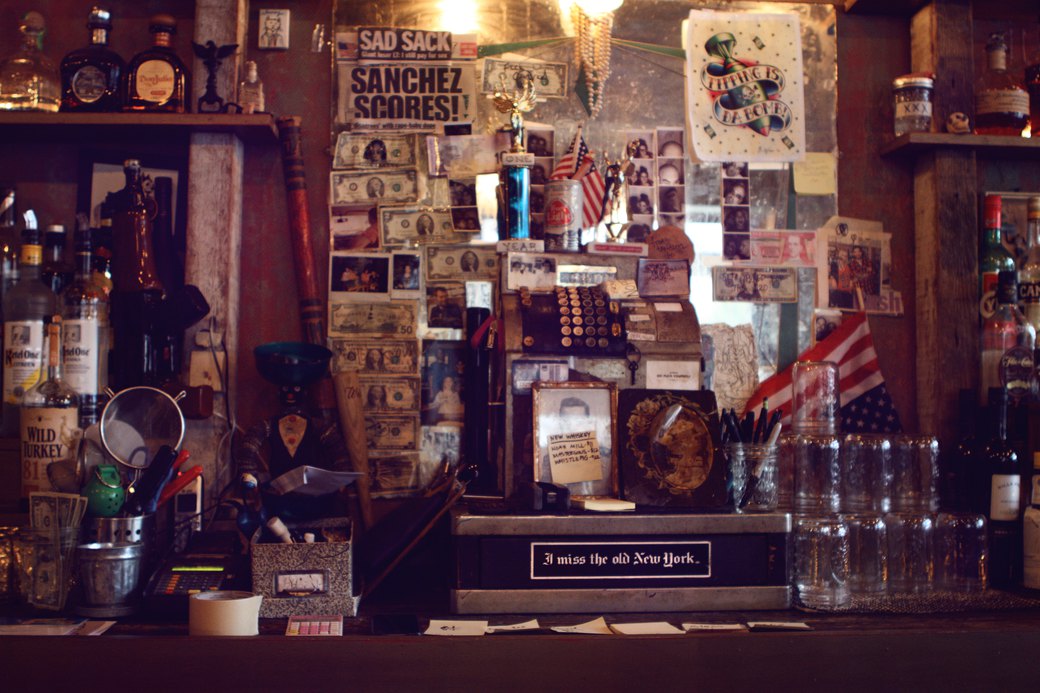
When doing anthropological research on gentrification in Bushwick one quickly finds out, that it is not a thing easily done – especially when you’re not even from this country. We came from Copenhagen having seen what we believed to be gentrification in our own city, but as expected, things move a lot faster in New York. That is probably why gentrification has much more of a place in people’s minds over here. Telling people in Denmark what were going to study all we got was “gentrifi-what?” But in Bushwick everyone seems to have an opinion about the topic – whether they think it’s good, bad, neutral or natural. What has surprised us more is that no one really seems to agree on what gentrification actually is.
“Gentrification is just natural. It’s just part of how life works – it’s good and it’s bad.” – Anonymous Bushwickian
And in New York, so it seems. There is hardly anything to do about it. We’ve seen it in Soho, we’ve seen it in Williamsburg, we’ve seen it tons of other places all around the city. People move because they have to, because the rent goes up. But when they do so, the rent goes up somewhere else and then other people have to move.
“Gentrification is rich people moving in, displacing poor people.” – Anonymous Bushwickian
But yet that would be oversimplifying the whole thing, wouldn’t it? Gentrification often also means lower crime rates, better infrastructure, more art- and cultural events. Or does it?
“Gentrification is when an area loses its uniqueness. But right now, the only unique thing about Bushwick is poverty.” – Anonymous Bushwickian
To some gentrification means Starbucks. To some it means displacement, of themselves or others. To some it means flourishing art and cultural life. To some it means diversity and different kinds of people living side by side. One thing seems for sure though. Gentrification is a buzzword, and a kind of indefinable one at that. Whether it is good or bad, and what it actually means to people, still seems stranded in uncertainty.
As anthropology students of the University of Copenhagen we’re really interested in learning what you have to say about the matter. What does gentrification in Bushwick mean to you? How would you define gentrification in Bushwick?


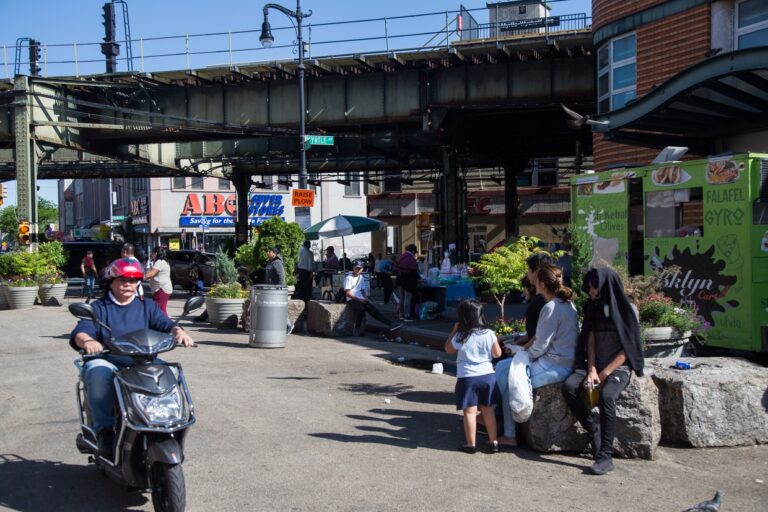
When I move into a neighborhood, it’s community revitalization.
When you do it, it’s gentrification.
Gentrification is a free form of urban renewal, off the backs of artists who then get thrown out of the neighborhood when it is “revitalized”. This does not just happen in Bushwick, but all over the world – China, Russia, France, I could go on and on. It starts like this. There is a run down, neglected neighborhood with little or no infrastructure, usually high crime, drug use, almost no shopping – in other words, abandoned – no one will touch it. Artists move into spaces not displacing any residents, but either moving into abandoned warehouses, or partially constructed buildings, or squats or whatever. They risk their lives, and whatever little money they have to fix the place up. That is free urban renewal. Then word gets out that they are doing this. Suddenly the neighborhood where no one would go, except under extreme circumstances (such as dire end of the road poverty) gets “trendy”. Real estate developers find out about it, and begin buying up property that was formerly considered worthless. They have connections to city government. The area is often rezoned, or rebuilt, usually with no protection or award for those people who built it up. They are usually booted out. Often, unless they have city housing or rent protections, the low income people who managed to live there as well are thrown out. It is a no-win situation for the original inhabitants. The economy revitalizes, new businesses come in, a more stable tax base develops. That is known as urban renewal. Usually it is city funded. In these examples, it is artist funded. It is not funded by anyone else. And the artists are not compensated for their investments. It is a class issue, it could be, but is not always a race issue.
On a related note, what exactly is a hipster?
Gentrification is what’s happening in Bushwick right now – privileged young kids moving somewhere temporarily, permanently displacing working-class families who have built their lives there. Real sad.
Working Class familys in America don’t let their neighborhood become a dumpster, how about installing more trashcans and teach your kids not to litter..It doesnt take any money to pick up the handfulls of garbage in front of your stoop, please.. have some pride. Guess people can get away with this in nyc.
People who don’t carer about their neighborhood get replaced by people that do. It doesn’t take money, all it really takes is for people to clean up their garbage, watch their kids, and participate in community events. We used to call this being an average American.
The real problem lies in the “kicked out” theory that gets sloshed around the media and comment boards. It’s a flawed stance and should be further discussed. There seems to be a much larger issue at hand – the movement of “immigrant hipsters” who lack funds from other cities, towns, states and countries. They follow and join true artists, locals and pioneers to take advantage of cheap housing in edgy cool neighborhoods.
Williamsburg, for instance, has plenty of true artists and locals, who have planted their roots decades ago. But what is the real % population of the above? I believe that the “hipster movement” is more to blame than the entrepreneurial developers and City agencies who attempt to build nicer housing, rehabilitate dilapidated buildings, improve retail, and lower crime rate as a result. The problem with New York City is that there will be a never ending strong demand to find cheap housing in cool neighborhoods. Period. The population of this group is enormous, millions with millions more to follow, and unfortunately for the artists and locals, unless you own or are rent protected in NYC, gentrification is likely if you can see the Manhattan skyline, or get there in under 20 minutes by subway.
Gentrification is connected to art, in a more profound way than is presently recognized. In the last century, the function of art became that of the “avant-garde,” which was to disrupt the thinking of the bourgeoisie. Today, the function of art is to disrupt working class neighborhoods. Correction, the function of the artistic subculture is to disrupt working class neighborhoods. Art itself has a few other functions as well. But there is no doubt in my mind that artists are the first catalysts of gentrification, if not the actual implementers. Far too much wind is blown in absolving artists of their role here. They are lumped in with “the locals” and seen as victims as well of gentrification. But the catalytic role of artists in gentrification is borne out in the character of gentrification itself, which fashions itself after the artistic lifestyle. Hipness and artsyness are marketed throughout the whole cycle of gentrification. Real estate developers subsidize theaters and dance companies in Williamsburg and Dumbo, because the arts are a critical selling point for gentrification. “The arts” are an organizing principal of gentrification.
Gentrification is caused by underbuilding housing on expensive land. More people want to live in Bushwick, because other nicer neighborhoods are getting too expensive. But all that demand is driving up the demand for land, and land prices are going up. The neighborhood is not adding enough new housing to stay ahead of the land price increases, so rents are going up. Unfortunately lots of people mistakenly want to blame the rent increases on *too much* development, rather than too little, and we’ll soon have politicians trying to restrict housing supply growth in response. Meanwhile the land prices will keep increasing, and people will have to keep moving further and further out into Brooklyn and Queens to find cheap housing. This is all really nuts. We need expensive neighborhoods to keep adding more housing when land prices increase, especially near transit stops where land is the most expensive.
A very good point you make, little grasped by most people. So-called “overdevelopment” and “high-density” development in inner-city neighborhoods with public transportation … has nothing but upsides on almost every count — socially, economically, and environmentally. And the more housing the better. More tax revenue to subsidize low-income housing, more units on the market to bring upper-income housing back down from the stratosphere as far as price or rent goes. But most important of all, to my mind, is a sustainable form of urban life based on public transportation and energy-efficient new buildings that can heat and cool the largest number of people at the lowest cost in carbon emissions.
When I moved to Williamsburg in the early 80s, I squatted the entire floor of a factory building on South 4th Street. We called it “The Zone.” The landlord was absent and the building was derelict. But for some reason the big gas-powered industrial heaters were still operational. Most of the windows were broken. But we were able to blast the place with heat and stay warm in about a ten-foot radius of any one of the heaters. This did not present a problem to us because at that time the arctic icecap was about double the size it is today. Eventually of course, it became a problem, and today my conscience would never allow me to waste energy in such a way. Ten years later, gentrification started. Ten years after that, massive residential development and rezoning of the Williamsburg waterfront was underway. And it has been a good thing. I don’t need people who moved to Williamsburg in 1998 to tell me about the wild and wooly days of the hood. I need my city to to become dense and efficient so it can survive another century. I need wealthy people to move back into the city from the suburbs, to stop chewing up the countryside with suburban sprawl, and to stop burning gallons of fuel on the highways every day. And this is the direction to which gentrification leads.