Hundreds of residents filed into Ridgewood’s P.S. 88 on a Thursday evening last week, writing feedback on Post-It notes and asking project representatives questions about the Inter-Borough Express (IBX), a proposed 14-mile light rail line from Sunset Park in Brooklyn to Jackson Heights in Queens. The session was the last public workshop in the area before the project’s Draft Environmental Impact Statement is released this fall, according to the Queens Ledger.

The IBX was first floated in 1996 as the Triboro RX and revived by Governor Kathy Hochul in 2022. The MTA estimates the project, which costs roughly $3 billion, would serve about 160,000 daily riders on a 32-minute end-to-end trip, linking neighborhoods largely bypassed by the existing subway map.
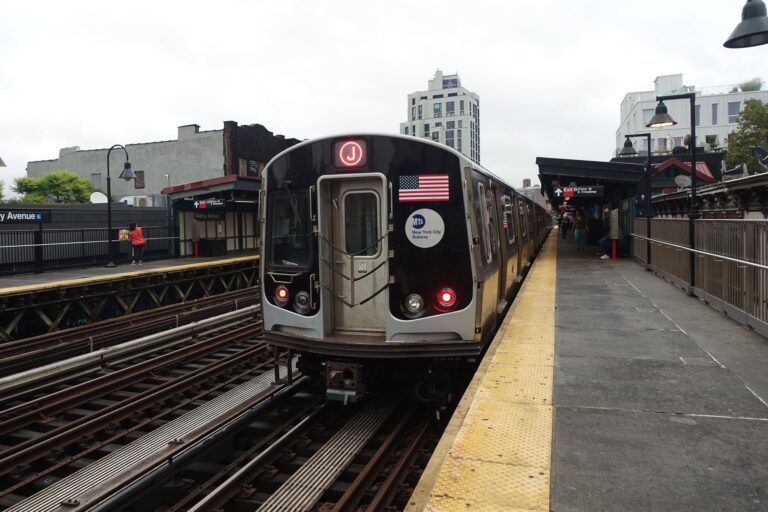
The corridor the IBX would run on already carries freight traffic. CSX Transportation sends trains through roughly twice per day. Under the IBX proposal, service would run every five minutes around the clock. The line originally carried passengers from the 1870s until 1924.




The round-the-clock frequency unsettled some attendees. Faye Au, a retired insurance broker from Elmhurst who lives adjacent to the proposed route, told the Queens Ledger she had already contacted a window company about soundproofing, and that the quote for doubling up a single yard-facing window exceeded $1,000. An outreach staffer at the expo argued the IBX would be lighter and quieter than the existing CSX freight trains, but Au was not persuaded. “I only care about the noise,” she said.
Hank Hamann drove over from Middle Village, where he has lived for more than a decade and where he says his neighbors uniformly oppose the plan. “It’s going to disrupt a lot of people where I live, because they’re used to things not changing,” he told the Queens Ledger. “You’re going to have a different type of people coming to look at houses there.” Hamann himself broke with his neighbors’ consensus: “I hope it’s going to happen, because I think change is inevitable. Positive change is better than negative change. And this would be a positive change for all the neighborhoods, because you’ll have another option to get from one place to another.” He was accompanied by Melissa Orlando, a transit activist now running for Congress from Sunnyside.
Josh Morse and his daughter Shea live a few blocks from P.S. 88 and wandered in after spotting signs for the expo. Shea, wearing a yellow hard hat, was immediately sold: “I can do cool tricks on trains!” Josh was more measured. His mother’s house sits near the proposed corridor, so noise is a practical concern for his family. He said he supports the IBX, but added one reservation: “I don’t think they’ll finish it in my lifetime.”
Four days before the Ridgewood workshop, many of the same questions surfaced in a smaller room. On June 1, Borough President Donovan Richards received a briefing at Queens Borough Hall from IBX project manager Jordan Smith, with roughly a dozen community board chairs in attendance. They pressed Smith on a projected completion date; he declined to give one. On eminent domain, Smith said the project team is “committed to minimizing the need to add land that is currently occupied,” noting the IBX would repurpose an existing corridor rather than claim new property. On power, he told Richards the line “will be electrically powered” but “will not draw from the residential community,” with the MTA coordinating grid logistics with Con Edison. Stormwater flooding, a recurring problem along the proposed route, came up repeatedly; Smith acknowledged that “we have to develop a comprehensive stormwater plan for our project” and said the MTA is in conversation with the state Department of Environmental Protection.
The MTA expects to publish a tentative corridor design this fall, followed by a new public engagement round in 2027. Smith projected that construction could begin in the early 2030s, though he acknowledged the uncertainty around large infrastructure projects. “You can’t plan from a desk,” he said, “so that’s not what we’re doing.”