A federal judge struck down the Trump administration’s $100,000 fee on new H-1B visa petitions on June 8, ruling it an unconstitutional tax. Four days later, on June 12, the same judge stayed his own order at the administration’s request, and U.S. Citizenship and Immigration Services resumed collecting the fee. For New York hospitals, universities, and tech firms sponsoring H-1B workers, the six-figure charge is back in force while the case moves to the First Circuit.
The fee originated with a proclamation President Trump signed on September 19, 2025, adding $100,000 to every new H-1B petition filed on or after September 21. The H-1B program lets employers sponsor workers in specialized fields, including medicine, education, and technology, for up to six years. Before the proclamation, filing a petition cost several thousand dollars. The new surcharge applies only to new petitions, not extensions or renewals, according to a National Law Review analysis of the proclamation.
New York Attorney General Letitia James led a coalition that grew to 20 states in filing suit in December 2025. U.S. District Judge Leo Sorokin, an Obama appointee on the District of Massachusetts, granted the states summary judgment in California et al. v. Markwayne Mullin and vacated the fee. His ruling held that the $100,000 charge is a tax, not a regulatory fee, and that the Constitution assigns the taxing power to Congress alone. The court also found the administration bypassed the notice-and-comment rulemaking process required by the Administrative Procedure Act, according to analyses by the National Law Review and immigration firm Adams and Reese.
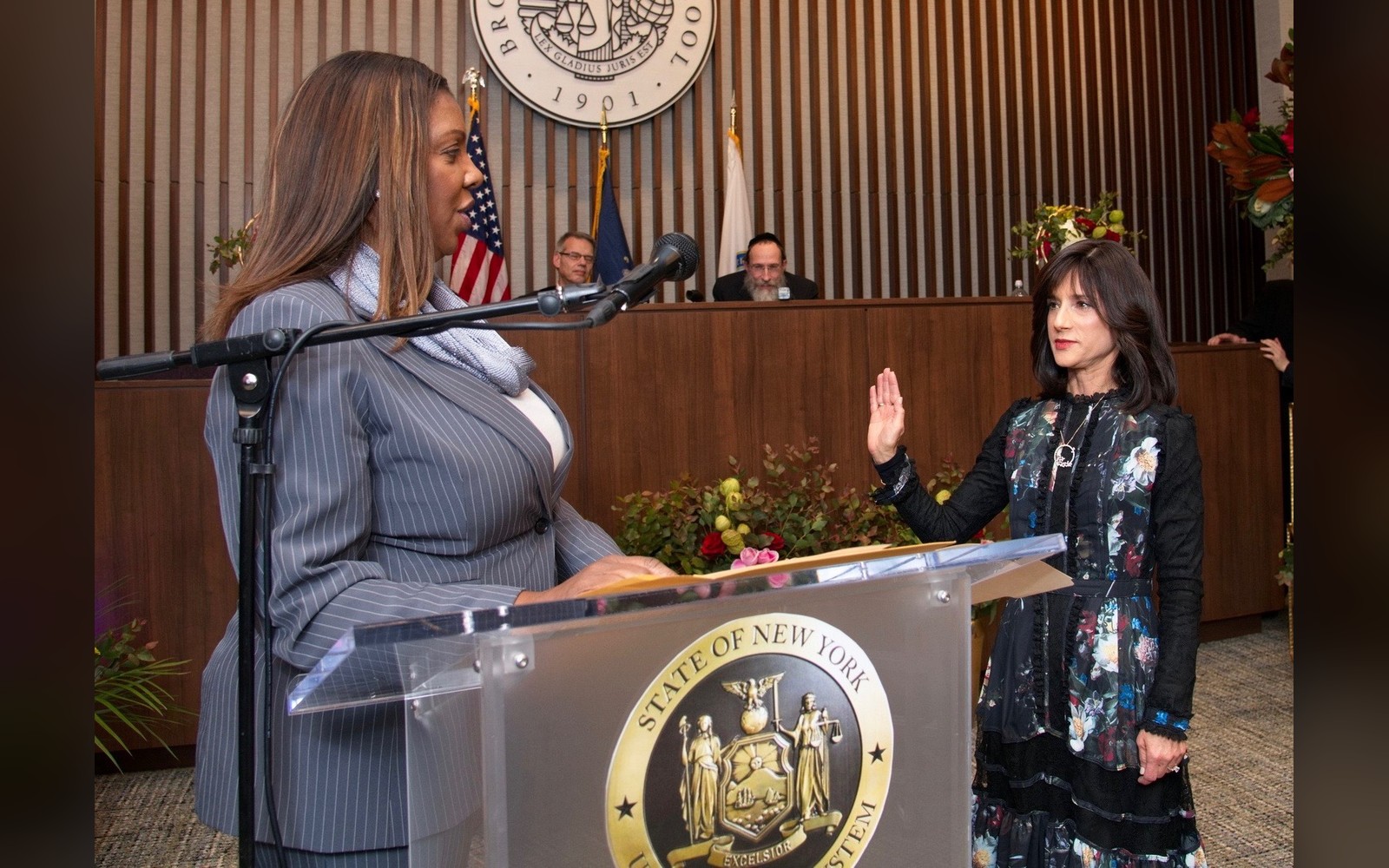
“Every day, thousands of people with H-1B visas serve New Yorkers as doctors, teachers, and other skilled workers,” James said in a statement on June 8. “Today a court put an end to this administration’s illegal attempt to destroy this critical program and the many jobs it makes possible. Workers with these visas contribute immensely to our state, and I will keep fighting to stop this administration’s unjust and unlawful attacks on our immigrant communities.”
The administration appealed to the U.S. Court of Appeals for the First Circuit, and Judge Sorokin stayed his own order while that appeal proceeds, according to immigration firm Fragomen, which tracks the docket. USCIS immediately resumed requiring the $100,000 fee on qualifying petitions. The government had until June 18 to formally ask the First Circuit to keep the fee in place through the full appeal; if it missed that deadline, Sorokin’s order vacating the fee would snap back into effect.
James’s office says more than 13,000 people on H-1B visas work across the state’s technology, finance, and arts sectors. The State University of New York alone employs 693 of them. More than a third of all healthcare workers in New York are immigrants, and the coalition argued in court that a $100,000 per-petition surcharge would worsen an already acute nursing shortage by making foreign-trained nurses unaffordable to hire. Sorokin cited this concern when he vacated the rule; the stay has put that relief on hold.
James was joined in the suit by the attorneys general of Arizona, California, Colorado, Connecticut, Delaware, Hawaii, Illinois, Maryland, Massachusetts, Michigan, Minnesota, Nevada, North Carolina, New Jersey, Oregon, Rhode Island, Vermont, Washington, and Wisconsin.
Featured image: Courtesy bushwickdaily.com