USDA proposes ending the SNAP eligibility rule New York uses, cutting 6.3 million people nationwide by 2029
The proposed rule, open for public comment until Dec. 10, would end broad-based categorical eligibility, which lets New York give food aid to working families and households with child care costs above federal income limits.
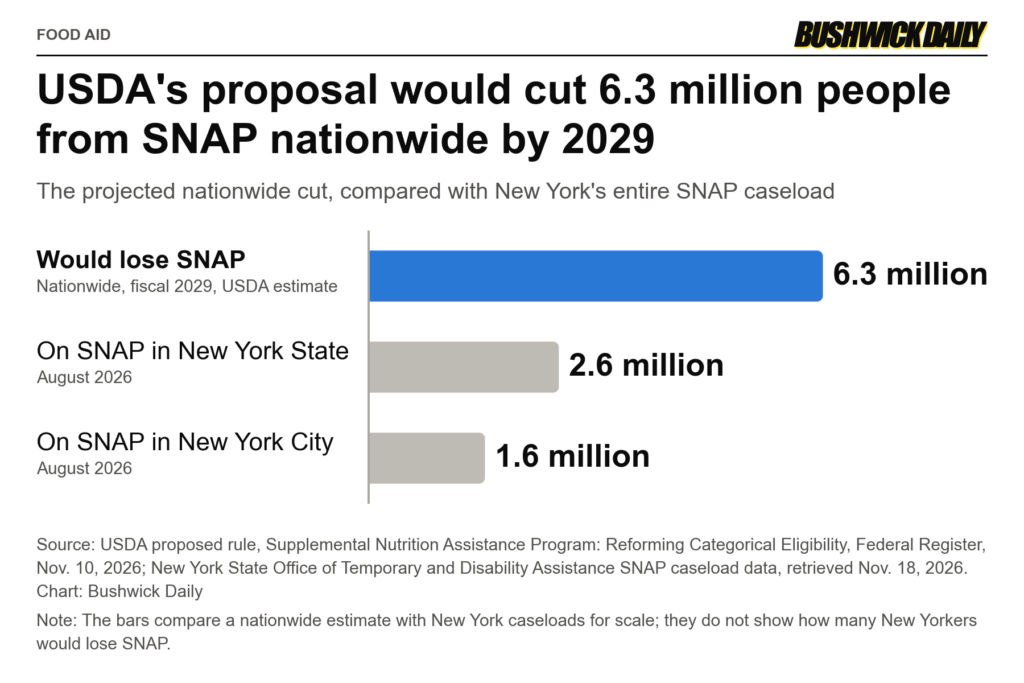
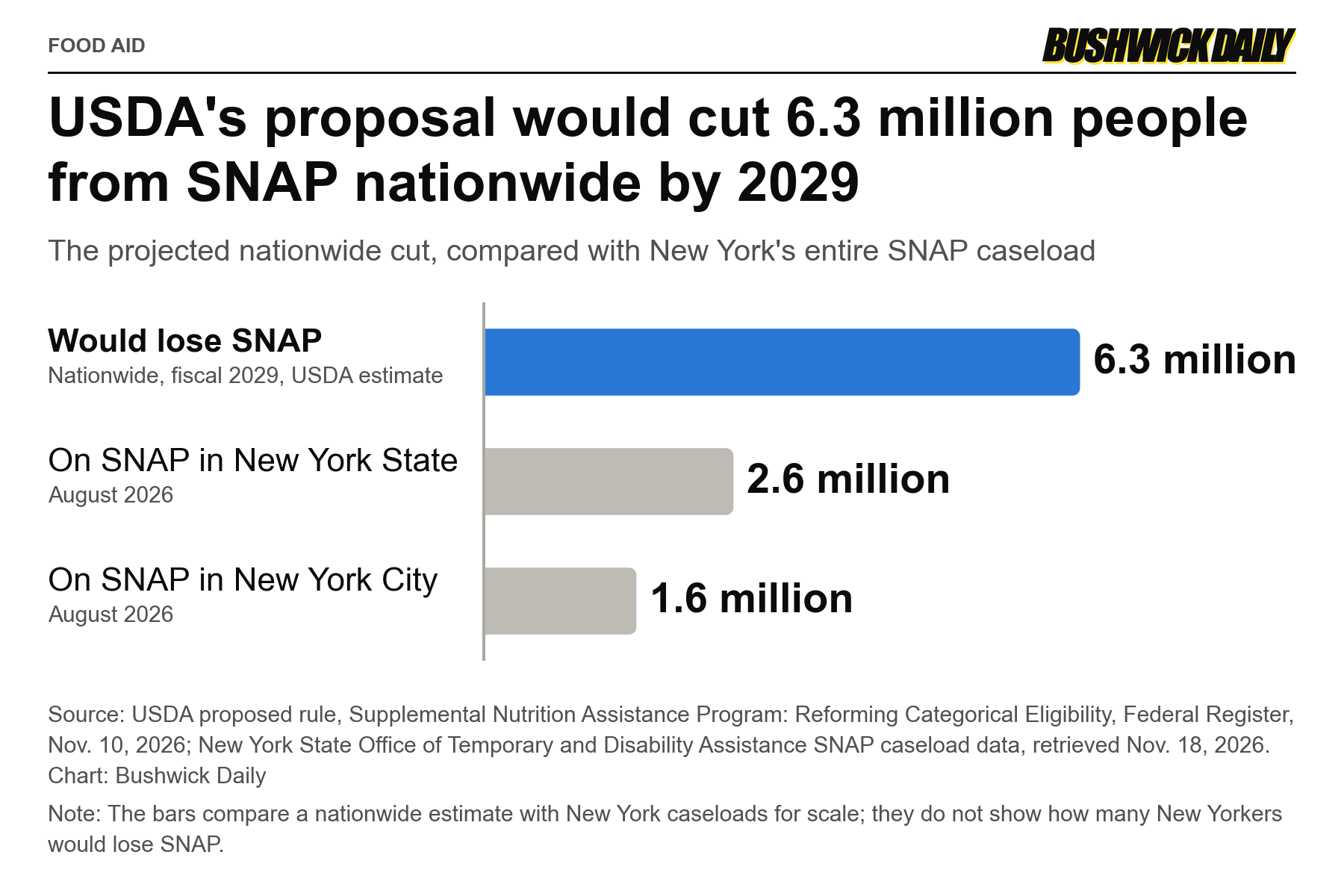
The U.S. Department of Agriculture published a proposal on Nov. 10 to end the rule New York and most other states use to give SNAP aid to working households above federal income and asset limits, estimating it would remove 6.3 million people by 2029.
The agency projects that 3.2 million households, 17.6 percent of everyone on SNAP nationwide, would lose benefits in fiscal year 2029, the first year the change would take full effect, and that federal SNAP benefit spending would fall by about $44.6 billion over five years, according to the proposed rule published in the Federal Register. The rule is open for public comment until Thursday, Dec. 10.
The policy at stake is known as broad-based categorical eligibility. Under federal law, a household without an elderly or disabled member generally qualifies for SNAP only if its gross monthly income is at or below 130 percent of the federal poverty guidelines. Current rules also let states make a household automatically eligible when it receives a benefit funded by the federal Temporary Assistance for Needy Families program, including non-cash benefits such as a brochure or a referral. The proposal would limit that automatic eligibility to households that receive TANF assistance, which is mostly cash, so other households would have to pass the regular federal income and asset tests.
New York confers that eligibility through its “Helping Hands” brochure, mailed to households every year, according to the USDA’s state-by-state chart . Households with dependent care costs qualify with gross incomes…
Thanks for reading Bushwick Daily.The rest of this story is for members.
Create your free account or log in to continue reading.