
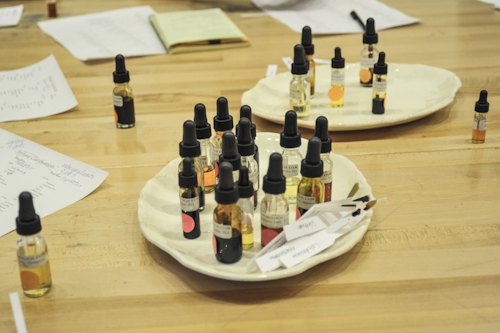
Everyone has an inexplicable attraction to smell – it’s biology. Most women rely on their favorite store-bought designer fragrances, whether floral, spicy, citrus, woody or musky. But what do we really know about where the scents in our little pink bottles come from? After all, the scents that we adorn ourselves with are largely synthetic, no longer reliant on the plant-based process of perfume-making that’s been around for thousands of years. 3rd Ward is currently offering a course that takes the history of perfume, lays it all in tiny essential oil vials, and allows you to experience it firsthand. The Art of Perfume Making is a class as fun as it was informative, enlightening to the mind and to the senses.
History Scents: From Egypt to Chanel No. 5
We started off the class with a history of scents. Perfume-making originated in Egypt and was continued by the Romans and Greeks. Did you know we’ve worn about 10-15 scents since ancient times? Some of the classics include frankincense, myrrh, and labdanum. In the 1500s, the number of scents in production started multiplying after the invention of distillation, or the process of extracting scents from flowers, and its widespread use. The first synthetic scent was created in 1889, the famous Chanel No. 5. The high notes, the low notes, the sweet, the savory, the spice and the musk – these are made up of synthetic aroma compounds, often made from petrochemicals, which include phthalates. There are many reasons that olfactory experts recommend avoiding synthetic scents, including some serious health risks and the fact that they simply do not feel the same to the nose and body as natural scents do.