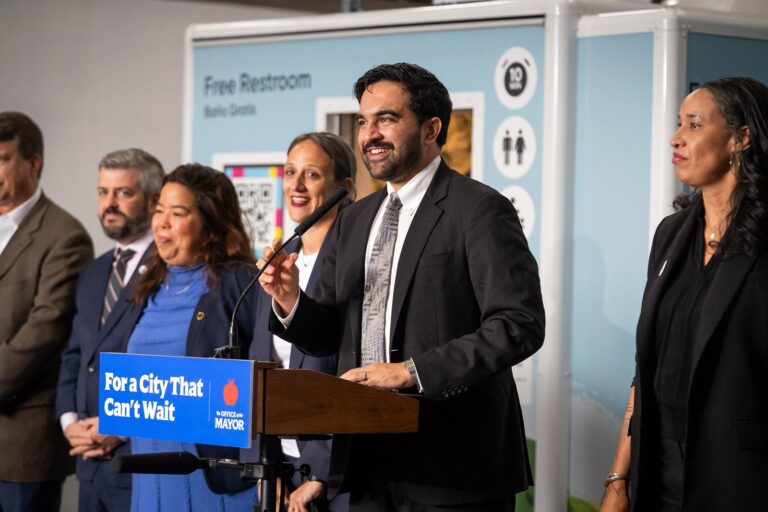
Greenpoint City Councilmember Lincoln Restler walked into the City Council’s Subcommittee on Zoning and Franchises with more than half an hour of questions for the team behind Monitor Point and no interest in softening his position. “There are some individuals here today that think we should take whatever crumbs this developer was willing to offer, and say thank you,” Restler said. “I’m not one of them. We can stand up and say we’re not willing to sell out our extremely valuable public land for primarily luxury housing.”
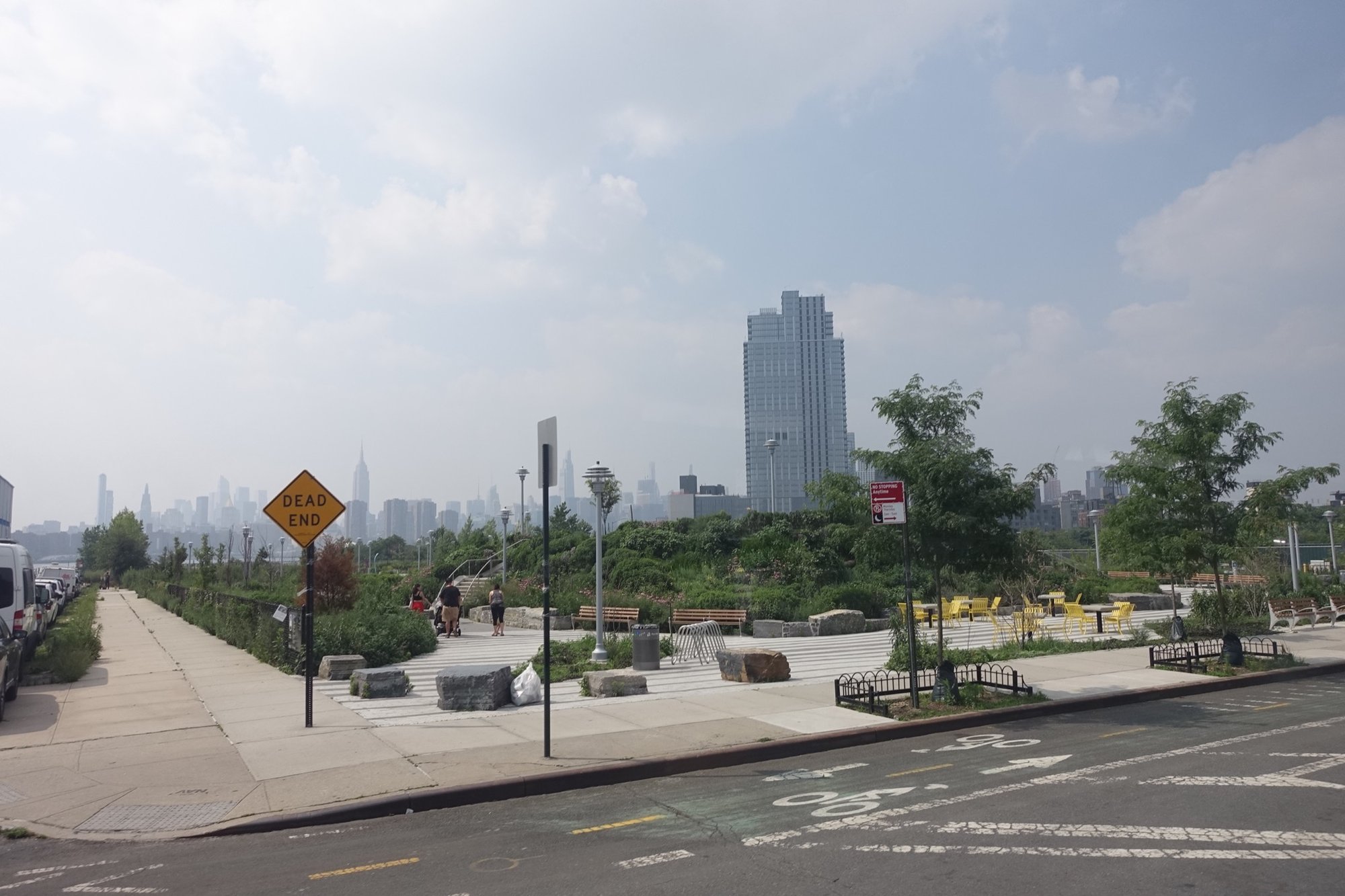
That set the tone for a nearly five-hour hearing at 250 Broadway that capped a months-long public review of Monitor Point, the Gotham Organization’s plan to build three high-rise residential towers, retail space and a museum on MTA-owned waterfront land next to Bushwick Inlet in Greenpoint. The proposal on the table called for 690 market-rate apartments and 460 affordable units, with Gotham paying ground rents to the MTA over a 99-year lease structured as four 25-year periods.
Restler’s sharpest line of attack was financial. Gotham’s estimated payment to the transit agency over the first 25-year period comes to $39 million, a figure Restler weighed against the MTA’s $68 billion capital plan. “That is the equivalent of MTA’s operating expenses for about one half hour of one day out of those 25 years,” he told MTA Deputy Chief of Staff Sean Fitzpatrick, whom Restler had invited to “take their lumps first.”
He then turned to Bryan Kelly, Gotham’s president of development, and pressed him on why the company had triggered the formal review rather than pausing to talk to the incoming Mamdani administration. “What I suggested was that you wait two weeks to talk to the new mayor, who was about to take office, so that we could see if there was an alternative proposal that might work for all of the parties involved, and you said no,” Restler said, as reported by the Brooklyn Downtown Star. Kelly pointed to six years of investment and contractual deadlines. “We have deadlines in our agreements with the MTA. We’ve made substantial investments to undertake this,” he said.
On the affordability numbers, Kelly offered a conditional commitment. “Council member, you’ve got our commitment to spend the next three to four weeks to try and tick that number upward. But to be clear, from our perspective, developers are executing upon a business plan. If we can move the needle, we’ll move the needle,” he said.
Restler laid out what it would take to win him over: “any proposal for this publicly owned land would have to guarantee true affordability in a clear majority of the housing units and an ironclad commitment with crisp timeline and full funding for the completion of the long promised Bushwick Inland [sic] Park.”
The park is the knot at the center of the whole fight. As part of the 2005 Williamsburg/Greenpoint rezoning, the City promised to build the final section of the 27.8-acre Bushwick Inlet Park on what is now the upper portion of the Monitor Point site. Twenty-one years later, most of that land is still a debris-filled brownfield. Gotham’s proposal would upzone the park’s original footprint to fit its towers, which opponents argue would make the City’s broken promise permanent.
Flood resilience drew some of the tensest exchanges. Monitor Point sits in a coastal flood plain exposed to storm surge and sea-level rise. Gotham Vice President of Development Simeon Maleh said the design accounts for that. “The infrastructure proposed contemplates that flood zone and considers it to ensure the protection of the residents. There’ll be no critical infrastructure in the basements of any of the buildings,” he said. Williamsburg resident Debra Funkhouser, testifying against the project, reached for Hurricane Ida as a yardstick. “Our stormwater system is built to handle 1.75 inches of rain per hour,” she said. “Hurricane Ida saw 3.5 inches of rain per hour. Basements are flooding and our subway systems and our streets are compromised. So why at this moment would we choose to put our affordable housing in such a vulnerable place? It seems irresponsible.”
Roughly 90 members of the public signed up to testify, including Save the Inlet activists, longtime Greenpoint residents and two fifth-graders from PS 34. Veronica Zapasnik, a Greenpoint resident and mental health coach who rallied outside 250 Broadway before the hearing, pushed back on the idea that opposing Monitor Point means opposing housing. She argued luxury towers reset rent expectations across the area. “The reality is, that when you bring in luxury towers, it does shift the benchmark, it moves it higher for the entire neighborhood. So all the smaller landlords see what’s possible, right? They see the precedents and then raise rents,” she said. She also framed the unbuilt park as infrastructure: “It’s not just about saving the birds. It’s a magical natural refuge for people to go for their mental health.”
Victoria Alexander, founder of the Red Hook preservation-focused brokerage Realty Collective, took aim at the NIMBY-versus-YIMBY framing of the debate. “It’s a false choice engineered by an industry that’s spent decades creating the very housing crisis it now claims to be solving,” Alexander said. Artist and lifelong North Brooklynite Marissa Bohk put it this way: “Homebuilding monopolies are the reason for the housing crisis, not the residents who live here.”
Monitor Point had support in the room too. Open New York, the building service workers’ union SEIU 32BJ, the Local 79 construction workers’ union and the North Brooklyn-based St. Nick’s Alliance backed the project, and both the local Community Board and Brooklyn Borough President Antonio Reynoso had previously voiced conditional support. Gotham’s team argued that the project’s public-private financing, including the cost of relocating the MTA’s existing mobile wash facility from the site, sets it apart from a typical public-land deal and makes the market-rate apartments necessary to keep the numbers solvent.
The full Council was scheduled to vote on June 25. Gotham’s affordability figures moved before that vote: the project later cleared the City Council with 662 of its 1,324 apartments set as permanently affordable.
Featured image: Courtesy bushwickdaily.com