
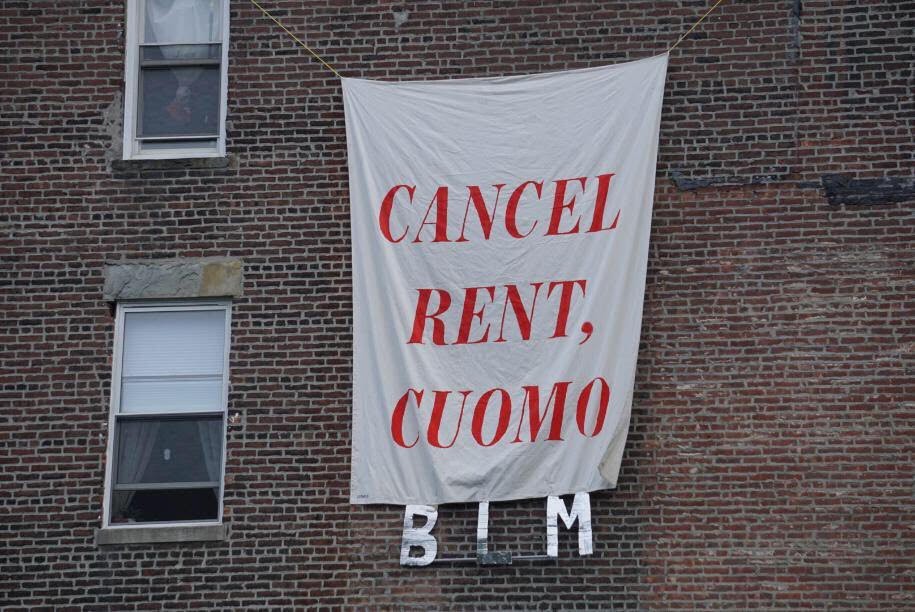
Before the pandemic even started, New Yorkers were plagued by a deeply inequitable rental market. Single-family homes became obsolete; the middle-class disappeared and was replaced by seven-day workweeks. The market swelled to greater heights than post-World War II and left in its wake a labyrinth of interconnected plights and one uniting question: how will the housing crisis of New York City be addressed?
Per a Wall Street Journal report, New Yorkers have amassed upwards of $1 billion in renters debt since March 2020, though some analysts put that number at $3.5 billion. The calls for rent cancellation have only grown in tenor while local and state leaders continue to move the goalpost on any kind of eviction moratorium. And while helpful in the interim, many rent-burdened New Yorkers are not back to work full-time, or at all. According to the February Labor report, unemployment claims continue to fall, but they’re still higher in the first few breaths of 2021 than they were in the final weeks of 2020.
With a fragile economy, slow-moving job gains, and an indebted rental market, many in New York City sit in a precarious position. And inside that precarity lies Bushwick, a case study in the changing demographics and ebbing tide of equity. And in Bushwick is Paperboy Love Prince, one of the few mayoral candidates who has promised to absolve all back-rent owed since the pandemic started.
Top photo credit: Full Time Tenant Union