
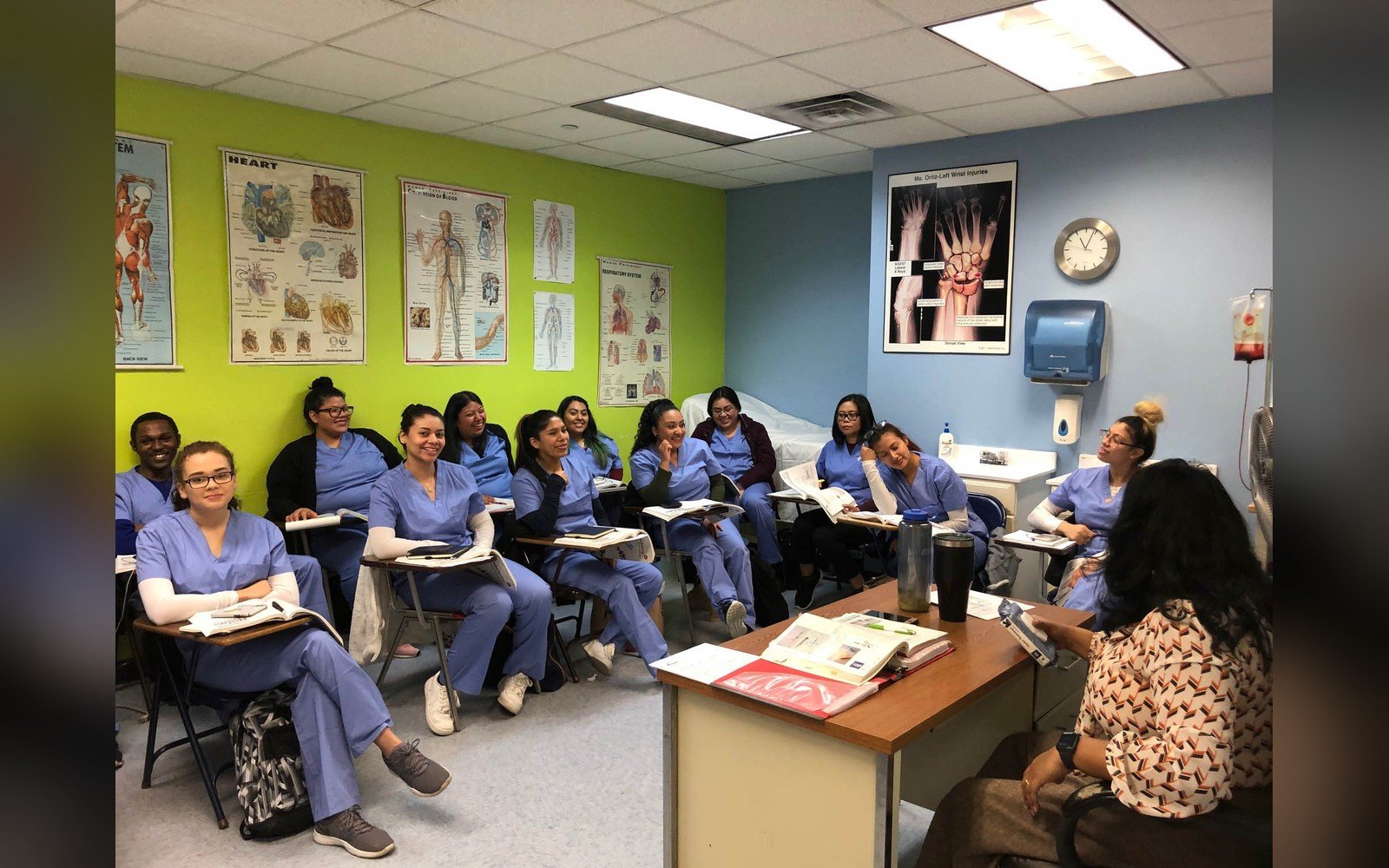
Several short-term training programs in New York City, some of them free, lead to health care jobs in weeks or months, from 12-week medical assistant courses to state-approved nurse’s aide programs, according to a guide Documented published September 14. The city’s health and social services sector employs more than 800,000 people, roughly 97 percent of New York hospitals report a nursing shortage and 88 percent say they need professionals beyond nurses, Documented reported.



Immigrants have long carried this workforce. About 57 percent of New York City’s health care workers were born outside the United States as of 2025, Documented reported, and several of the entry-level programs are built for people who speak more than one language or who are tied into immigrant communities.
The fastest way in is usually a medical assistant program, which runs 12 weeks full time or 24 weeks part time, Documented reported. The job covers vital signs, prepping patients for exams, helping doctors, scheduling and basic administrative and clinical work, and pays roughly $45,000 to $60,000 a year in the city. You can find these programs through Workforce1, CUNY continuing education, community colleges and employer-run training.


If you have a high school diploma or GED and currently earn under $91,000 a year, you can apply for an Individual Training Grant that covers tuition, registration fees and books, Documented reported. You apply through the Workforce1 website or in person at a career center. The application is available online, and once approved, the grant can pay for hundreds of courses listed in the NYC Training Guide.
Community health worker training runs three to six months and pays about $45,000 to $65,000 a year, Documented reported. The role connects patients to the health system and services, provides health education and supports preventive care, and demand is strong for people who are multilingual. Hostos Community College, workforce agencies, nonprofits and major health systems all run programs. LaGuardia Community College offers a free community health worker certificate program to those who qualify; applicants need proof of immigration status or a valid work permit and can email [email protected] or call (718) 730-7708.
Certified nurse’s aide programs approved by New York State typically run 4 to 12 weeks and end with a state competency exam, Documented reported. Aides help patients with daily activities like bathing, dressing, eating, moving and vital signs in nursing homes, hospitals, rehab centers and home care, and earn about $40,000 to $60,000 in the city area. It is short, it is often free or low-cost, and it is a common stepping stone to becoming a licensed practical nurse or registered nurse. Programs run through the state Nurse Aide Registry’s approved list, CUNY continuing education, workforce agencies, nursing homes that pay you to train, and large systems like NYC Health + Hospitals and Northwell Health.
Commonpoint runs a free Allied Health program with job placement for people who can commute to Queens, Documented reported. Applicants have to be 18 to 24, hold a high school diploma but not yet an associate or bachelor’s degree, and have a Social Security card, among other requirements. The next cohort starts in November 2026, and to apply for the Queens program you have to attend an in-person information session at the Commonpoint Silver Hub in Elmhurst. Commonpoint’s Bronx CNA training is more flexible on age, open to those 18 to 40 with a valid Social Security card or work permit, and includes paid training and an internship.
The office-track option is medical coding and billing, which runs 4 to 12 months and pays about $50,000 to $75,000 in the city area, Documented reported. The work turns medical services into billing codes and processes insurance claims, with less direct patient contact. Community colleges, adult re-education programs and online certifying bodies all offer it, and SUNY Downstate Health Sciences University and LaGuardia Community College both run certificate programs, with LaGuardia offering financial aid and scholarships. A valid state ID is required to apply.
Featured image: Courtesy commonpoint.org