With Intro 1135 now in effect, a look back at the corporate lobbying campaign and internal City Hall dynamics that preceded the mayor’s veto.
In August 2025, Mayor Eric Adams vetoed legislation that would have established a minimum wage of more than $20 per hour for grocery delivery workers. The veto came after Amazon Fresh and Instacart lobbied against the bills, and after the mayor’s chief of staff Randy Mastro “launched an internal advocacy effort against the measures,” the New York Daily News reported, citing sources familiar with the matter.
Adams vetoed the bills on Aug. 13, 2025, 18 hours before the legal deadline. Had he taken no action, the bills would have become law automatically.
The legislation, known as Intro 1135, was designed to close what advocates call the “Instacart loophole.” In 2021, the City Council passed minimum wage protections for food delivery workers on platforms like DoorDash, Grubhub and Uber Eats. But the law excluded grocery and package delivery workers., leaving Instacart and Amazon Fresh workers without the same wage floor. For four years, grocery delivery workers earned approximately $13 per hour while food delivery workers on other platforms earned more than $20.
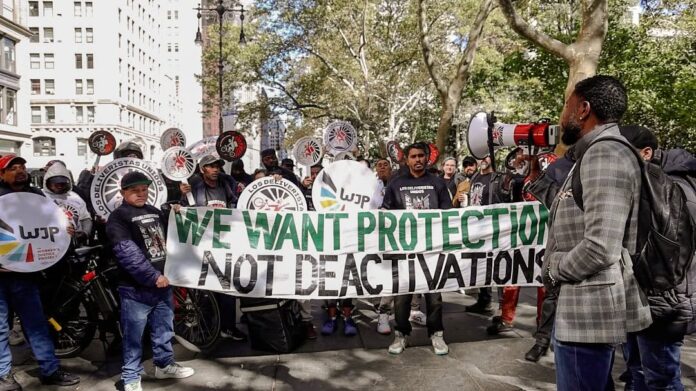
The City Council passed Intro 1135 in July 2025 with strong support. Council Member Sandy Nurse sponsored the legislation, and Council Members Shaun Abreu and Jennifer Gutiérrez rallied alongside delivery workers at City Hall, AMNY reported. The Department of Consumer and Worker Protection commissioner had also supported the bills, according to the Daily News.
Mastro’s opposition inside City Hall overruled his own agency’s position. The Daily News reported that the chief of staff’s internal advocacy effort came as Amazon Fresh and Instacart were publicly fighting the legislation. Instacart’s summer 2025 strategy: the company lobbied against the wage bills while simultaneously running a consumer-facing campaign called “Summer Like It’s 1999,” which included a free Third Eye Blind concert at Terminal 5. Attendees were required to prove they had downloaded the Instacart app.
On Aug. 14, one day after the veto, City Council Speaker Adrienne Adams announced the Council would vote to override. She called the mayor’s vetoes “anti-working class.”
On Sept. 10, the Council voted 36-14 to override. AMNY reported the override “barely eked out” the two-thirds majority required — 34 votes were needed.
The organizing infrastructure behind the override drew from Brooklyn. Los Deliveristas Unidos, an immigrant-led worker collective concentrated in Brooklyn and Queens, mobilized delivery workers for City Hall rallies and council testimony. Approximately 65,000 app-based delivery workers operate in New York City, many of them immigrants. Worker’s Justice Project, a Brooklyn nonprofit led by Ligia Guallpa, organizes immigrant workers on wage theft and labor conditions and supported the campaign.
The United Food and Commercial Workers union condemned Adams’ veto on Aug. 14, calling it a failure to close the “Instacart Loophole” and criticizing corporate lobbying by Amazon Fresh and Instacart.
Intro 1135 is now law. The legislation applies to all contracted delivery workers across food, groceries and other goods, according to City Limits, establishing minimum pay, transparency and safety standards. The four-year gap between food and grocery delivery worker wages is closed. The law takes effect January 28, 2026.
For more news, sign up for Bushwick Daily’s newsletter.
Join the fight to save local journalism by becoming a paid subscriber.