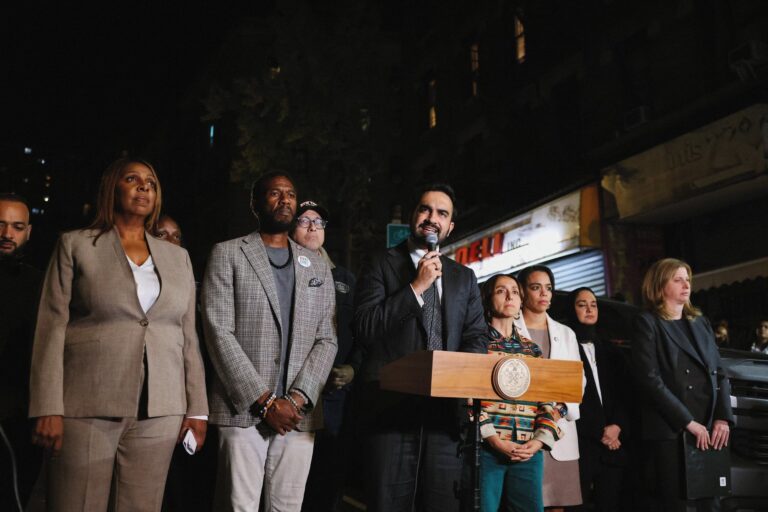
Milton Perez spent five years in New York’s shelter system, and when he needed to apply for permanent housing, he could not do it where he slept. “I used to go to use the Wi-Fi in the subway station to apply for housing,” Perez, now a leader with VOCAL-NY’s Homelessness Union, told reporters this month. The state Legislature just voted to make sure the next person does not have to ride the train to fill out a rental application.




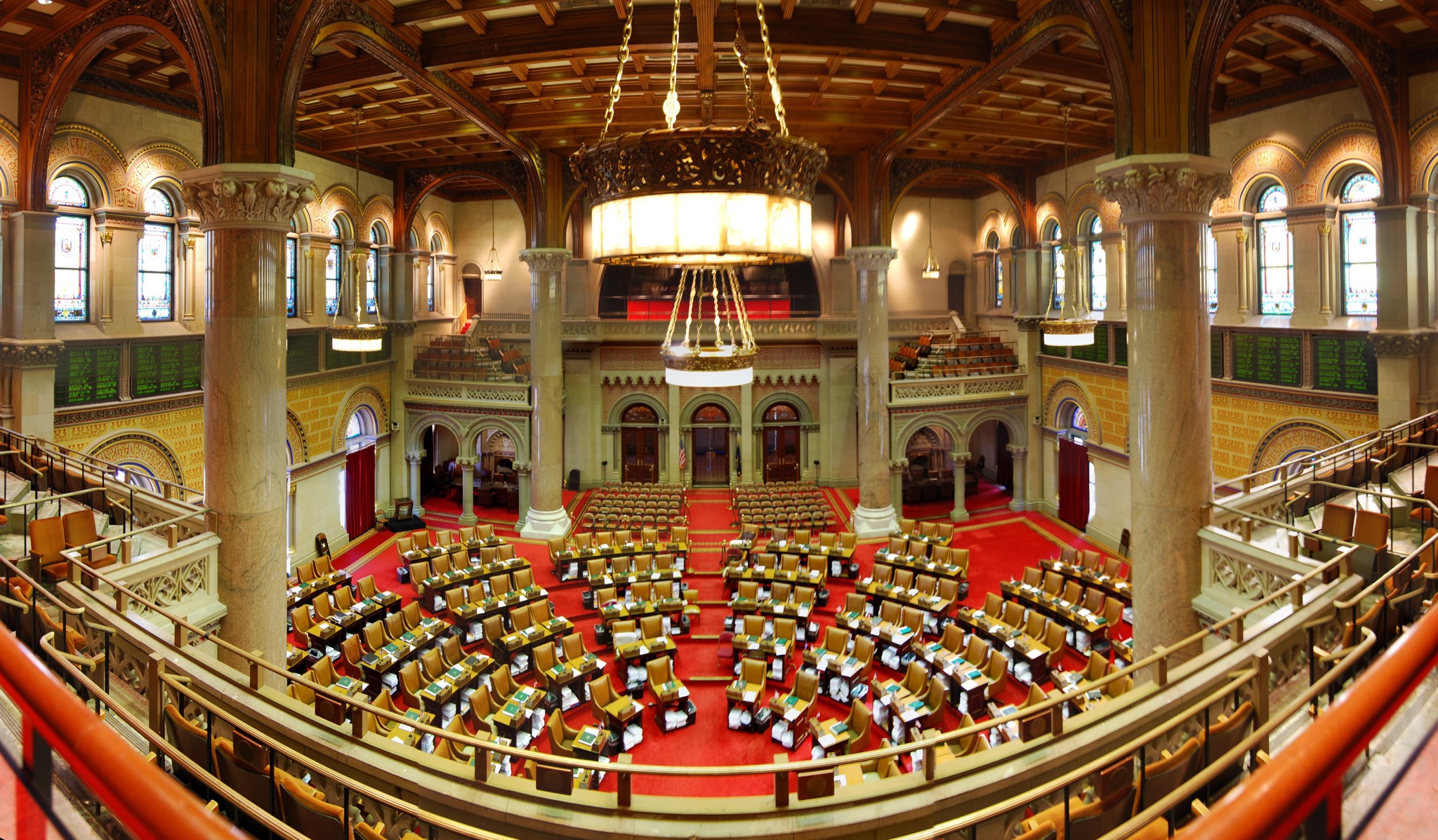
On June 5, the New York State Assembly passed the Internet in Shelters bill, two days after the State Senate cleared it 41 to 20 on June 3, according to the bill’s official record on the State Senate site. The legislation, S.8026-A sponsored by Senator Kristen Gonzalez and A.1755-A sponsored by Bronx Assemblymember Karines Reyes, R.N., would require every temporary housing facility in the state to provide residents with internet access. It now sits on Governor Kathy Hochul’s desk awaiting a signature.
The bill does not mandate some bare-minimum connection. The text on the State Senate’s site requires “download speeds of at least one gigabit per second and upload speeds of at least one gigabit per second,” or the fastest commercially available speed in the area if true gigabit service is not reachable. That is symmetrical gigabit, faster than what plenty of paying New Yorkers in market-rate apartments get. It is not limited to traditional shelters. As Gothamist reported, the requirement reaches hotel shelters, domestic violence facilities, and runaway youth housing, and covers both common areas and private rooms.
The other half of the bill is about who gets to watch you while you use it. The legislation says facilities “shall not be required to actively monitor or control the information accessed” by residents, and bars operators from using, disclosing, selling, retaining, or permitting access to a resident’s personal information except as needed to provide the service or to comply with a court order, per the bill text on the State Senate site. That means the people running the shelter cannot turn your job search and your medical appointments into data they monitor, keep, or sell.


The privacy language is what the New York Civil Liberties Union, part of the WiFi4Homeless coalition that pushed the bill, focused on. “Whether it’s submitting rental applications, applying for jobs, completing homework, accessing government services, or navigating the legal system, in our digital age, reliable internet access is everything,” said Daniel Schwarz, Senior Privacy and Technology Strategist at the NYCLU, in a statement on the bill’s passage. “For too long, people living in the shelter system have been left out of the equation. This bill will remedy that by guaranteeing internet in temporary housing statewide, establishing protections against surveillance, and treating all data equally without censorship.”
A lot of people are in the system. The NYCLU put New York City’s nightly municipal shelter population at 101,978 people as of November 2025, with roughly another 15,175 people in shelters across the rest of the state as of 2023. Most of them are offline where they live. A 2025 survey of more than 200 adults in the system, conducted by VOCAL-NY and the legal nonprofit TakeRoot Justice for a report called “Wi-Fi for All,” found that fewer than a quarter had Wi-Fi access in their shelter and only about 30 percent had a computer room available, as City Limits reported. More than half were paying overage fees on their own phone plans just to stay connected, according to Gothamist’s account of the same survey.
New York City already wired up its family shelters. It only did that after it got sued. In November 2020, during pandemic remote schooling, the Legal Aid Society and the law firm Milbank filed E.G. v. City of New York on behalf of three families with children in shelter, arguing the city was violating kids’ state constitutional right to a “sound basic education” by leaving them without internet to do their schoolwork. The city settled in April 2021 and, as City Limits reported, finished installing Wi-Fi in more than 240 family shelters by May 2022 at a cost of about $6 million. But that fight was won only for households with school-age children. Single adults and adult couples, tens of thousands of people, were never part of it. This bill closes that gap.
The bill’s sponsors framed it as basic parity. “People in temporary housing are not asking for anything extraordinary; they are asking for what every New Yorker with a roof over their head already has,” Reyes said, per City Limits. Gonzalez put it in terms of what a connection unlocks: “Reliable WiFi means being able to apply for housing and jobs, access healthcare and benefits, attend school, and stay connected with loved ones,” she said in the coalition’s statement. The city’s Department of Homeless Services did not fight it. Spokesperson Nicholas Jacobelli told City Limits, “We support efforts to expand access to critical resources like Wi-Fi for New Yorkers in shelter.”
The money question already has a partial answer. On May 13, Empire State Development announced up to $20 million to wire shelters statewide, with $17 million for installation through the state’s ConnectALL Office and a $3 million in-kind investment from the Public Service Commission, according to ESD’s announcement. “Through ConnectALL, we are ensuring that individuals and families in temporary housing are not left behind in an increasingly digital world,” said Hope Knight, ESD’s President, CEO and Commissioner, in that release. The legislation is written to take effect immediately on enactment, per the State Senate record, though the practical rollout timeline depends on how fast the state and shelter operators move.
For now, the whole thing hangs on one signature. The bill has passed both houses and been delivered to the Governor, and the WiFi4Homeless coalition is publicly pressing Hochul to sign it. If you want to weigh in, you can read the full text and track the status of S.8026-A on the New York State Senate’s bill page, where the same page lets you register support or opposition, and the Governor’s office takes constituent comment on bills awaiting action. The people who had to go to the subway to apply for an apartment are not asking for much. They are asking for the Wi-Fi that the family down the hall already got, after a lawsuit, four years ago.
Featured image: Matt Wade / CC BY-SA 2.0 via Wikimedia Commons