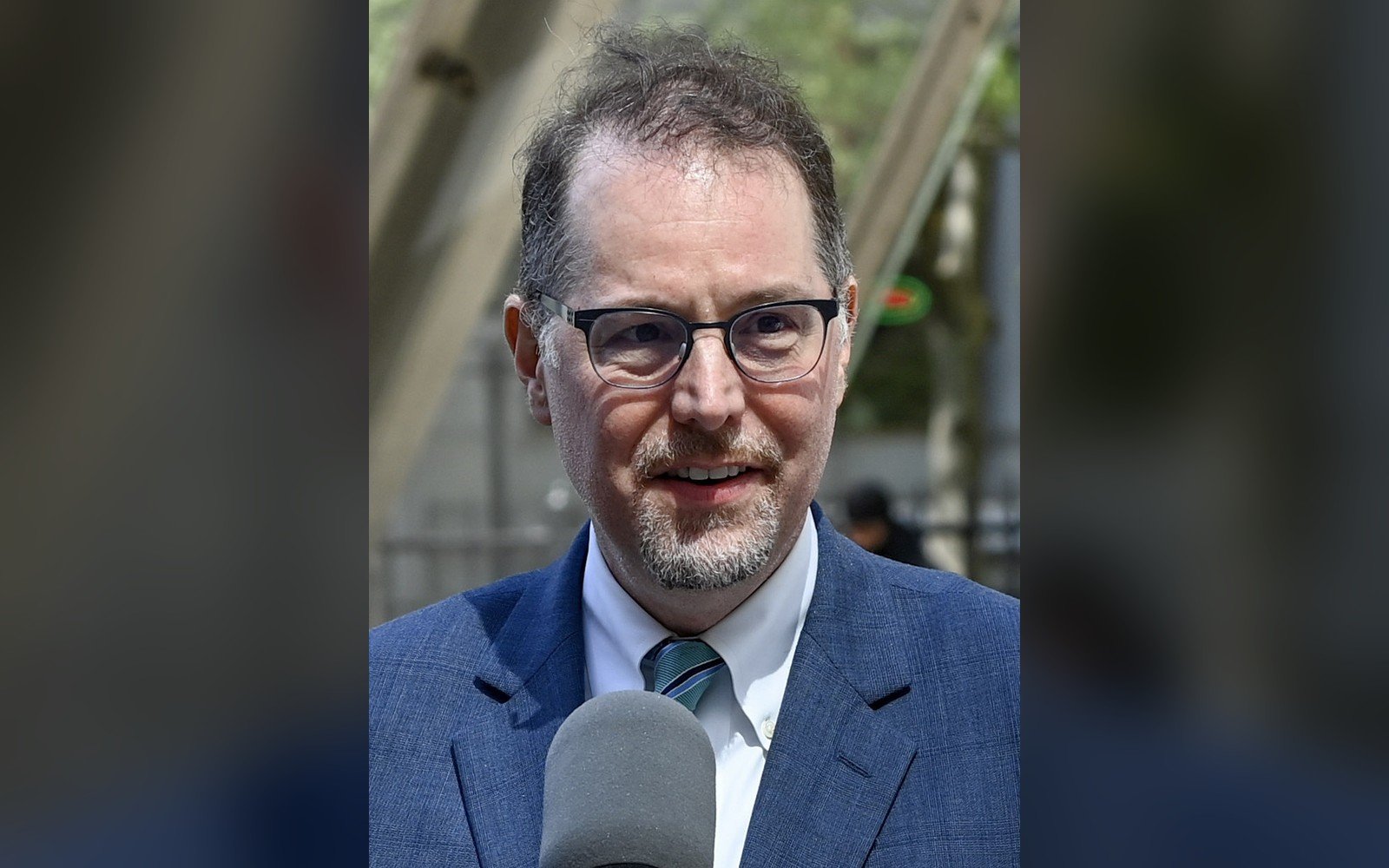
New York City Comptroller Mark Levine on September 23 recommended a $5 billion expansion in private markets climate investments across three of the city’s public pension funds, a step his office said moves the funds toward their goal of investing $37.8 billion in climate solutions by 2035. He unveiled the proposal during his first Climate Week as comptroller.




The Comptroller’s Office’s Bureau of Asset Management expects to present a total of $5 billion in new private market investment opportunities to the boards of the New York City Teachers’ Retirement System (TRS), the New York City Employees’ Retirement System (NYCERS) and the Board of Education Retirement System (BERS), along with their investment consultants. Each board will consider the opportunities for approval, subject to its system’s own due-diligence and fiduciary review. The opportunities focus on renewable power generation, grid modernization, energy efficiency and storage, clean transportation and building decarbonization, as well as technologies that reduce pollution, strengthen energy and water security, and improve resilience to extreme weather.
“Our pension systems have a responsibility to make sound investment decisions that preserve and grow the retirement assets that our pensioners depend on,” Levine said. “As the climate crisis places a growing strain on our infrastructure and the broader economy, investing in cleaner, more reliable and resilient energy that can lower costs and reduce emissions at the same time is an essential part of our prudent long-term investment strategy.”
The three systems adopted a goal in 2023 of reaching net zero financed emissions across their investment portfolios by 2040, with climate solutions investing as one pillar of their Net Zero Implementation Plans, which set the $37.8 billion goal.
Earlier in 2026, NYCERS, TRS and BERS committed $116 million to Sandbrook Climate Infrastructure Fund II, which the Comptroller’s Office said was the first private markets climate-focused investment during Levine’s term.
The push toward private markets follows a period in which the funds’ climate-solutions gains came largely from the stock market rather than direct investment in energy projects. The Comptroller’s Office said past progress on climate solutions investments has mostly come from the appreciation of technology stocks in the passive portfolios. In their FY2025 annual climate reports, the systems reported that Nvidia is the single largest contributor to each fund’s climate solutions, because MSCI classifies 88 percent of Nvidia’s revenue as contributing to energy efficiency. As of June 30, 2025, TRS held $7.34 billion in climate solutions investments, NYCERS held $5.4 billion and BERS held $726 million, according to the funds’ FY2025 climate reports.
The Comptroller’s Office framed the expansion around the scale of the energy transition and rising energy costs. It said more than $2.3 trillion was invested globally in the energy transition in 2025, with an additional $320 billion flowing to renewable energy in the first half of 2026, and that growth in artificial intelligence, data centers, reshored manufacturing and transportation electrification is expected to drive a 40 percent increase in U.S. power demand by 2040. The office said household electricity bills rose an average of 33 percent nationally between August 2021 and August 2026, while New York City customers saw bills rise 47.6 percent between July 2021 and July 2026. It also cited an analysis finding that 223 manufacturing and clean energy projects, representing $82.9 billion in investment and 111,765 jobs, have stalled or been canceled across the country under the current federal administration.
Featured image: Metropolitan Transportation Authority via Wikimedia Commons, CC BY 2.0, modified